Custom Gym Membership Portal vs Third Party Integrations: Choosing the Best Fit for Your Fitness Business
Your gym's digital presence should function as a tireless digital employee, working 24/7 to attract new members and support your existing community. The choice between a custom gym membership portal and off-the-shelf third-party integrations is key to achieving this. It determines whether your online operations truly serve your unique business needs or just offer generic functionality. A custom platform ensures your digital tools always work for you, not the other way around.
Understanding the Build vs. Buy Dilemma in Gym Management
The main difference between a custom-built portal and third-party integrations comes down to control and specificity. A custom portal is made from scratch, exactly to your specifications. This offers unmatched flexibility in its design, features, and how it connects with other systems. Third-party integrations, like Mindbody, Glofox, or Zen Planner, are pre-made solutions built for a wide market. They give you standard features, meaning you often adapt your business to the software, rather than the other way around.
Today, digital interactions are vital at every point of the member journey, from their first question to ongoing engagement. Potential members expect instant answers, easy class bookings, and simple membership sign-ups. Current members want straightforward access to their training plans, account details, and community features. Many gym owners realize that generic software often creates more problems than it solves. This pushes them to seek tailored solutions that genuinely reflect their brand and how they operate. A website that just lists services isn't enough anymore; it needs to be an active digital employee, ready to meet member needs efficiently. At Tropikal, we've found that gym owners spend hours updating their website manually — our chat-based system cuts that to minutes, freeing them up for what matters most.
The Benefits of Third-Party Integrations: Speed and Reliability
Third-party integrations offer clear advantages, especially for newer or smaller fitness businesses with immediate needs and limited initial funds. They usually have lower upfront costs and get you going faster. You can often set up a basic membership and booking system using platforms like Acuity Scheduling for classes and Stripe for payments in just days or weeks. This lets you focus on opening your physical doors without extensive digital development.
These platforms come with a set of established features, including automated billing, class scheduling, and basic lead management tools. For example, a small yoga studio might use Mindbody for its existing setup, benefiting from its reliable automated payments and scheduling without a big development cost. Vendors also handle ongoing security updates and technical support. This takes a significant load off gym owners who don't have in-house IT staff. While convenient, the trade-off is often a standard experience that might not fully match a gym's unique brand or specific operational details. Even with third-party tools, we often see gym owners needing extra workarounds. For instance, at Tropikal, we've helped clients integrate their existing payment gateways more smoothly into a custom front-end when the out-of-the-box options just weren't cutting it for their brand. For insights into general digital trends in fitness, consider reports from Fitness Industry Council of Canada.
The Strategic Advantages of a Custom Gym Membership Portal
A custom gym membership portal means you fully own the user interface (UI). This ensures your brand looks consistent across every digital interaction. Your member portal, booking system, and content management all feel like a natural extension of your gym, not a jumble of different third-party tools with varying looks and navigation.
The main strategic benefit is creating unique features that third-party platforms simply don't offer. A specialized martial arts gym, for instance, might need a token-based booking system where members use 'strikes' or 'rounds' from their membership instead of standard credits. This would be built directly into their training plan. This kind of bespoke functionality isn't something you can buy off-the-shelf. A custom portal also allows for direct integration with specific hardware, such as biometric entry systems or smart gym equipment. This creates a truly connected and intelligent gym environment. When we set up an AI receptionist for a martial arts gym, trial bookings jumped because prospects got answers at night instead of waiting until morning. Their custom platform, built by Tropikal, integrated an AI receptionist that explained memberships, answered common questions, and booked trial classes directly into their calendar—even at 11 PM. This immediate engagement transformed casual inquiries into confirmed leads, demonstrating how a custom digital employee can drive measurable business growth. Visit Art of Sportschool to see a real-world example of a Tropikal-built digital presence.
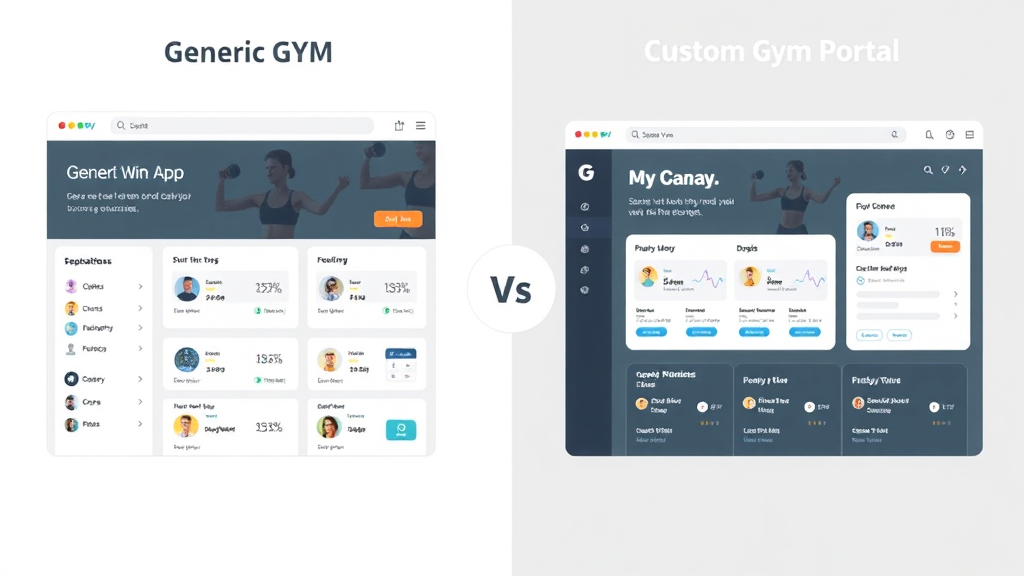
Cost Analysis: Upfront Investment vs. Long-Term ROI
Comparing the costs of custom versus third-party solutions means looking beyond the immediate price tag. Custom portals typically come with a higher initial development cost. This is an investment in software made precisely for your business model and brand. In contrast, third-party solutions usually run on a monthly SaaS subscription model. This looks cheaper at first but adds up significantly over time.
However, third-party software often has 'hidden costs.' These can include per-member fees that grow as your gym expands, transaction percentages on payments that cut into revenue, and extra charges for premium features or integrations vital for your operations. For a gym with 500 members, a $1 per-member fee could mean an extra $500 monthly on top of the base subscription, totaling $6,000 annually before transaction fees. If your gym processes $10,000 in monthly transactions, a 1% fee adds another $100.
Figuring out the break-even point is essential. For a rapidly growing or multi-location operation, the total costs of third-party platforms can quickly exceed the initial investment in a custom build. A custom solution often becomes more profitable within 2-3 years. It eliminates recurring per-member fees and unlocks efficiencies that generic platforms simply can't. A custom platform is an asset that gains value, allowing for continuous improvements without vendor restrictions. One pattern we see across our gym clients: the ones with an AI receptionist on their site convert late-night visitors into trial bookings consistently, making that initial custom investment pay off quickly. For more on business technology investments, refer to general guidance from the Small Business Administration.
Data Ownership and Business Intelligence
One of the biggest downsides of many third-party systems is the risk of data silos and limited access to thorough analytics. Your member data often lives within the vendor's system, making it hard to pull out, combine, and analyze effectively for deeper business insights. This can prevent you from truly understanding member behavior, personalizing your outreach, and spotting trends crucial for strategic growth.
A custom portal, however, gives you complete data ownership. This allows for detailed member data analysis, leading to highly personalized marketing campaigns and targeted retention strategies. You can track specific class attendance patterns, equipment usage, or even preferred training times. Then, use this data to create relevant offers or content for individual members. This level of insight is incredibly valuable for making smart business decisions. Plus, having control over your data simplifies compliance with GDPR and other data protection laws. You decide how data is collected, stored, and managed, instead of relying on a third-party's policies. At Tropikal, we ensure full data ownership for our clients. This means they can track member progress, class preferences, and even peak usage times to inform scheduling and marketing – insights often locked away in generic platforms. For best practices in data privacy, consult resources like the International Association of Privacy Professionals.
Scalability and Future-Proofing Your Fitness Brand
Third-party limitations can seriously hinder the growth of multi-location gym franchises or businesses looking to expand their services. As your gym grows, you might find your chosen third-party platform lacks the flexibility to integrate new systems, support more locations, or adapt to evolving business models. This can lead to expensive workarounds or the painful process of moving to an entirely new system, potentially disrupting member services.
A custom system offers the flexibility to change course and add new revenue streams without being restricted by a vendor's plans. Whether you want to launch a video-on-demand library for at-home workouts, create digital products, or integrate a unique loyalty program, a custom portal can expand to fit these innovations smoothly. Software performance also becomes critical for member retention as your user base grows. A slow or clunky experience on a third-party app can frustrate members, causing them to leave. A custom-built platform, optimized for your specific needs, ensures a smooth and engaging user experience. This directly helps build long-term member loyalty. We built a custom booking platform for a martial arts gym – their members now book sessions with tokens from their membership, and the owner hasn't touched an invoice spreadsheet since. This kind of bespoke flexibility is crucial for long-term growth, something we prioritize at Tropikal. For example, a multi-location gym chain struggling with inconsistent branding across different Mindbody accounts could consolidate into one custom portal, ensuring uniform member experience and centralized data management, thereby boosting overall retention.
User Experience: Why Personalization Trumps Standardized Software
Making the booking and renewal process easy is crucial for member satisfaction. Standardized third-party software often provides a generic user experience that might not match your gym's brand voice or member demographics. Members could face confusing interfaces or have to switch between multiple apps for different tasks (e.g., one for booking classes, another for account management, and a third for tracking progress). This fractured experience can be a big source of frustration, leading to disengagement.
A custom portal lets you design a tailored user experience that focuses on ease of use and brand immersion. Picture a booking flow that perfectly matches your class structure, or a member dashboard that highlights relevant training tips and progress tracking specific to your gym's programs. This personalized approach builds a stronger sense of community through custom social features, challenges, and communication channels built directly into your platform. Members feel more connected when their digital experience is consistent and reflects the unique culture of their gym. At Tropikal, we’ve found that when members can easily book classes, check their progress, and interact with an AI helper all in one branded place, their loyalty deepens. It’s about building a digital home, not just a tool. A fitness studio using a custom portal could implement an AI Member Portal Helper that provides personalized workout suggestions based on a member's past performance and goals, a feature rarely available in generic apps. This bespoke interaction enhances member value and fosters loyalty.
| Feature Aspect | Third-Party Integrations (e.g., Mindbody, Glofox) | Custom Gym Membership Portal (e.g., Tropikal Build) |
|---|---|---|
| Initial Cost | Lower (monthly subscription fees) | Higher (upfront development investment) |
| Deployment Speed | Fast (days to weeks) | Slower (weeks to months, depending on complexity) |
| Customization Level | Limited (configuration within vendor's framework) | Unlimited (built to exact specifications) |
| Feature Set | Standardized, off-the-shelf features | Bespoke, unique features tailored to business needs |
| Data Ownership | Often shared or restricted access (vendor's ecosystem) | Full ownership and control of all data |
| Scalability | Dependent on vendor's roadmap, potential limitations | Highly flexible, built for future growth and new features |
| Branding Control | Generic UI with limited branding options | Complete brand consistency across all digital touchpoints |
| Hidden Costs | Per-member fees, transaction fees, add-on costs | Maintenance and potential future development costs |
| Integration with Hardware | Often limited to pre-approved integrations | Seamless integration with any hardware (e.g., biometrics, IoT) |
| Content Management | Dashboard-based, often complex | Chat-based, simple updates by messaging |
| AI Capabilities | Basic chatbots, often generic | Custom AI Receptionist, Member Portal AI Helper |
Final Verdict: Making the Right Choice for Your Gym
Deciding between a custom gym membership portal and third-party integrations depends on your business's current stage, growth plans, and how much control you want.
Here’s a checklist to determine if your gym is ready for a custom build:
- Are you experiencing limitations with your current third-party software that hinder growth or member experience?
- Do you have unique operational flows or branding requirements that generic platforms cannot accommodate?
- Are you looking to integrate specific hardware or develop proprietary features that differentiate your gym?
- Is data ownership and deep business intelligence critical for your strategic decision-making?
- Do you plan for significant growth, including multiple locations or diverse service offerings, in the next 3-5 years?
If you answered yes to most of these, a custom solution is likely your best path forward. For smaller, newer fitness studios with limited budgets and straightforward needs, third-party integrations like Mindbody or Glofox can provide a reliable starting point.
However, a hybrid approach is also becoming popular: combining custom front-ends with powerful third-party APIs for specific backend functions like payment processing (e.g., Stripe, PayPal). This allows for a branded user experience while still relying on the stability of established payment gateways. Even this method can introduce complexities in data synchronization and feature development, though. It requires careful management to avoid a fragmented user experience.
At Tropikal, we specialize in building custom gym platforms that act as true digital employees. Our solutions include an AI Receptionist that explains memberships, answers questions, and books trials 24/7; a Member Portal AI Helper for training tips and progress tracking; and chat-based content management, allowing gym owners to update their website with a simple message, eliminating complex dashboards. We also implement token-based booking, where members use tokens from their membership or punch card, integrated with training plans and automatic invoicing. For multilingual reach, our platforms feature auto-translations on autopilot, ensuring your content is accessible to a wider audience. These custom platforms are designed to generate leads while you sleep and provide exceptional support to your members, all without the limitations of generic templates. Learn more about how AI can transform your gym's customer service at tropikal.dev/research-insights/ai/ai-chatbots-for-gyms-transform-customer-service-boost-growth. Discover how to drive growth with AI automation at tropikal.dev/research-insights/ai/ai-automation-for-business-boost-efficiency-growth.
Frequently Asked Questions
Is it cheaper to build a custom gym portal or use a third-party app?
Initially, third-party apps appear cheaper due to monthly subscriptions. However, for growing gyms, a custom portal's long-term ROI can be higher by eliminating per-member fees and unlocking unique efficiencies over time.
What are the main advantages of a custom gym membership system?
A custom system offers complete brand consistency, the ability to develop unique features, seamless integration with specific hardware, full data ownership, and superior scalability for future growth tailored to your business.
How long does it take to develop a custom gym member portal?
Development time varies based on complexity and desired features, typically ranging from a few weeks for simpler portals to several months for comprehensive platforms with advanced integrations and bespoke functionalities.
Can I switch from a third-party gym app to a custom-built portal?
Yes, it is certainly possible to switch. The process involves careful planning for data migration and re-establishing digital workflows, which a specialized development partner can manage efficiently to minimize disruption.
Do custom gym portals offer better member retention than generic apps?
Custom portals generally lead to better member retention by providing a personalized, frictionless user experience and offering unique engagement features that foster a stronger sense of community and brand loyalty.
Stop losing leads at night and struggling with fragmented digital tools. Get a website that works for you, 24/7, like a dedicated digital employee.